hami@yuanjdfitting.com
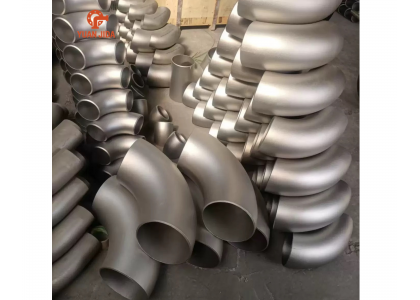
When sourcing pipe elbows, most buyers compare prices first. Smart buyers compare material differences first — because the wrong alloy can cost you ten times the price in downtime, leaks, and replacements.
So what makes stainless steel elbows fundamentally different from carbon steel or low-alloy steel elbows? And among stainless steel itself, which grade gives you the real advantage?
Let’s cut to the facts.
1. Stainless Steel vs. Carbon Steel Elbows – The Critical Difference
Feature Stainless Steel Elbow Carbon Steel Elbow
Corrosion resistance Excellent (passive chromium oxide layer, self-repairing) Poor (rusts in moisture, needs coatings)
Maintenance cost Low over lifetime High (re-coating, inspection, premature failure)
High temperature strength Retains strength up to 800–1100°C (grade dependent) Weakens above 400°C
Surface finish Bright, clean, hygienic Dark/black, rough
Upfront cost Higher Lower
Lifecycle value Superior in corrosive/wet/hygienic environments Only suitable for dry, non-corrosive, low-temp services
Marketing truth: If your pipeline handles water, steam, chemicals, salt air, food, or pharmaceuticals, carbon steel is the wrong choice. Stainless steel elbows pay for themselves by simply not failing.
2. Not All Stainless Steel Elbows Are Equal – Grade Differences Matter
We manufacture stainless steel elbows in the following grades. The difference between them can be the difference between 5 years of service and 25 years.
Grade Key Difference Best For
304/304L Basic stainless, good formability Fresh water, food, indoor piping
316/316L Added 2-3% molybdenum → far better chloride/pitting resistance Marine, coastal, chemical plants
310S High Cr & Ni → excellent heat resistance up to 1100°C Furnaces, heat exchangers, high-temp lines
321/347 Titanium/niobium stabilized → prevents weld decay High-temperature services requiring welding
904L Super-austenitic with copper → resists sulfuric/phosphoric acid Acid plants, flue gas treatment
2205 Duplex Two-phase structure → double the strength of 316, better stress corrosion resistance Offshore, desalination, oil & gas
2507 Super Duplex Highest strength & pitting resistance (PREN >40) Subsea, aggressive seawater
The marketing takeaway: Don’t over-specify (304 may be enough). But under-specifying (using 304 in seawater) guarantees failure. We help you match the exact grade to your environment.
3. What About Alloy Steel Elbows?
Alloy steel elbows (e.g., A234 WP11, WP22) are designed for high temperature and pressure in refineries and power plants — but they still corrode when moisture and chemicals are present. Stainless steel elbows bridge the gap: corrosion resistance + good temperature performance. For truly extreme heat, go alloy steel. For corrosion + moderate heat, go stainless steel.
Why Buy Stainless Steel Elbows From Our China Factory?
Full material traceability – PMI tested on request.
One-stop supply – 304/304L, 316/316L, 310S, 321, 347, 904L, 2205, 2507… all from our China stainless steel elbows factory.
Short lead times – Large stock of blanks + fast CNC beveling.
Certifications – ISO 9001, PED, EN 10204 3.1/3.2.
Stop replacing corroded elbows every year. Switch to the right stainless steel grade — and forget about it for decades.
Hebei Yuan JiDa Group is a 16 years professional China flange manufacturer.
Address:河北省保定市高开区乐凯北大街3088号深圳湾(保定)创新中心A座1104室
河北钰金多贸易有限公司
Hebei YU Jinduo Trading CO.,LTD
Add:1104 Room A, Shenzhen Wan Building,Lekai North Street,Jingxiu District, Baoding City, Hebei Province
zipe code:071000
Contact us:
Email:hami@yuanjdfitting.com
Tel/wechat/whatsapp/skype:+86 18731225866 working time:08:00-18:00 Every day
China Flange types: plate flange,weld neck flange,blind flange,puddle flange,slip on flange,pipe flange, pipe fittings and could provide pipes, valves.....contact us:0086 18731225866 We are flange suppliers.More flange China factory information click below:
[ read more ]